
Can You Avoid Root Canal Procedures?
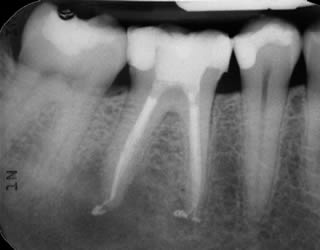
Given its (unwarranted) reputation for pain, it isn’t surprising that people would rather avoid having this treatment.
Today’s blog discusses a particularly unpopular dental procedure, and one that causes even usually calm patients to feel a little anxious. Yes, we mean a root canal procedure. This much maligned treatment is actually very useful and can prevent a tooth needing to be otherwise extracted. We should say that if patients do need to have this carried out, they shouldn’t fear. It is always carried out using a strong local anaesthetic and should cause no more discomfort than many other procedures. Its reputation is likely to have come from times before x-rays and anaesthetics were standard practice.
This procedure is used to preserve a tooth where the soft pulp material located in the root canals has become infected. This can lead to a lot of pain and potential formation of abscesses. With this procedure, the restored tooth can last for quite a long time. The only other option is to extract it.
Avoiding the need
We are confident that patients of the Foxhall Dental Practice in Ipswich should have no cause for concern if they need to undergo this procedure. We are aware though, that many people reading this would, quite rightly, much rather avoid the need for it in the first place, so we will take a look at that now.
Why do root canals become infected?
In order to avoid the need for this treatment, we need to understand what leads to it needing to be done. Within the root canals of a tooth lies the soft pulp. This includes tiny blood vessels and also the nerves of the tooth, hence why this can be a very painful problem. This soft pulp doesn’t become infected on its own though and is usually caused by it coming into contact with bacteria. The only way that this can happen is if the tooth enamel has become compromised, perhaps through a crack, chip or tooth decay. Once this has happened, the infection will spread deeper inside the tooth and may well end up in its root canals.
Prevention
The best way to prevent this from happening is by looking after your teeth well. If you keep the tooth enamel strong and healthy, it should protect the more vulnerable inner parts of your teeth from bacterial infection. This can be done with a tooth friendly diet, good brushing and flossing and seeing the hygienists and dentists at our Ipswich dental practice on a regular basis. In addition to check ups etc, you should also make sure to contact our local practice if you suspect there might be a problem, even if it isn’t causing you any pain at all; for example a small chip or crack that has appeared. We will look at why you should do that next.
Early intervention
Too many patients delay seeing a dentist when they suspect there is a problem with their teeth, perhaps in the hope that it will go away, which is very unlikely. The fact is that the sooner we can take a look at a potential issue, the better the outcome is likely to be, so please don’t delay if you spot a small chip or if the tooth is aching even a little. Early intervention is key if you want to avoid teeth root infections.
Once bacteria has entered the softer dentin layer of the tooth, it may well end up in the root canals unless it is stopped. The sooner an issue is detected, the sooner it can be treated. This is likely to be in the form of a small filling or similar. This should prevent the bacteria from going any further. If you leave it longer before you see us, you might require a larger filling or even a crown. The longer you leave it though, the more likely it is that you will be too late and will require root canal treatment.
If you do need it….
It may be that, having read this blog, you are regretting not seeing the dentist sooner about the throbbing sensation in a tooth or getting them to look at the tooth following a breakage. If this is you, please contact us now. It may still not be too late but is more likely to be if you don’t address the problem asap.
If you do need to have this procedure, please remember that we are aware of how afraid some people might feel about it. We can help with this, not only by providing a strong local anaesthetic but with the aid of an experienced dental team. We can also take a little time to explain what really happens during this treatment. We sometimes find that people have some strange ideas about what this procedure entails and feel a whole lot better about it once we have explained the realities of it to them.
The key then is to take good care of your teeth, see the dentist and hygienist for ongoing care and, finally, contact us as soon as you notice a problem with your teeth.
If you would like to know more about this, or any other, procedure, please do give us a call. You can contact the Foxhall dental practice today on 01473 258396. We are always happy to help you.