
What Causes Dental Fillings To Break Or Come Out?
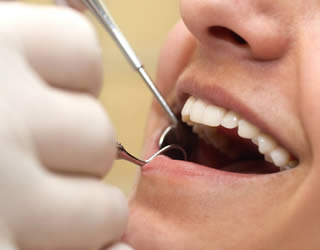
We think may think our fillings will last forever. Unfortunately, this is not likely to be the case.
Fillings are one of the most common restorative treatments that we use at our Ipswich dental clinic. Most people can expect to have a filling or two during their lifetime, although hopefully, better oral health education will help to reduce this even further by preventing the need for them in the first place. Fillings can be used for both small and larger cavities and offer a long lasting solution to restoring a tooth.
Once we have got used to our new filling after its placing; we might eventually forget that it is there and eat as we used to do, not even considering that the filling probably won’t last forever. When they do eventually break or come away from the cavity, we are surprised. The fact though is that fillings might last a long time but they are not permanent, and in today’s blog, we are going to take a look at some of the reasons why they might break or fall out.
Wear and tear
Fillings are strong and will last for a long time, whether they are amalgam fillings or white teeth fillings such as we are able to provide at our local dentist in Ipswich. However strong they are though, wear and tear will start to affect them as they get older and start to weaken a little. It is impossible to predict how quickly this will happen as it depends not only on the age of the filling but on the type of foods that you eat among other things. For example, someone who solely ate pork scratchings is likely to find that damage occurs more quickly than someone who only ate yoghurts. Obviously no-one does this but if you generally enjoy hard and crunchy foods, it is more likely to happen to you than someone who largely eats softer foods.
Tooth decay
This one might seem a little strange considering that this is what would have created the need for a filling in the first place. If you have amalgam fillings though, they can eventually shrink away from the natural tooth over time. This creates gaps around the filling where bacteria can enter and cause further decay. This will change the shape of the tooth and the filling may fall out. Interestingly, this is less likely to happen with anyone who has white dental fillings as these bond well to the tooth and don’t move away, so gaps are much less likely to occur. Naturally, further general decay on another part of the tooth will also weaken it and increase the chance of the filling coming away.
Hard sticky foods
Especially if the filling is already ageing, but even with newer ones too; chewing something hard and sticky, such as a hard toffee, can cause some ‘pulling’ on the tooth repair. This can loosen it and eventually pull it out; so it is generally better to avoid foods that might do this. There is a reasonable chance that the filling won’t come out but eating this type of food certainly increases the risk.
Teeth grinding
If you suffer from bruxism; where you grind your teeth at night, this is likely to apply an excessive amount of force onto your fillings and quite possibly crack or break them. You might wish to discuss the possibility of wearing a mouthguard with your dentist to help protect your teeth at night if you do suffer from this.
Unexpected pressure
Our brains work, second by second, to tell us what we are about to bite down on and helps us to adjust our bite accordingly. This breaks down where we bite into something we expect to be soft and our teeth and fillings hit something expectedly hard. The force used when this happens may be sufficient to crack or break a filling, or indeed a tooth. An example of this might be a small stray stone in some cereal or a small piece of an olive pip left on your favourite pizza.
Tell tale signs
If a filling falls out, you will almost certainly quickly know about it. Where a small piece breaks off though, or a filling is slightly loose, this might not be the case.
Aside from any sharp edges or obvious changes in the shape of the filling, one of the most common symptoms you might experience is a sensitivity to hot and cold temperatures. If this occurs then you should see one of our Ipswich dentists to have it checked out as soon as possible.
If you suspect there might be a problem with one of your fillings, or if you are experiencing any discomfort in a filled tooth, please contact us for an appointment to have it checked. You can do this by calling the Foxhall Dental Practice on 01473 258396 and we’ll be pleased to help.